Helping Kids Find & Pursue Their Own Interests

My husband and I have been talking recently about how much influence we really have on what interests/hobbies our kids pursue. Are they just born with certain innate talents and inevitable interests? We have our own ideas about what we think would be best or fun for them to do, but offering it to them does not guarantee that they will choose it for themselves.

However, we do want them to learn basic foundational things and to have passions that carry them through the ups & downs of pursuing anything worthwhile. Things such that music, sports, art, etc. can teach. Over time, we have learned what most veteran parents or educators know – performance only goes as deep as ownership. When kids get to choose their own pursuit, there is “buy-in,” excitement, and a positive attitude to push through the inevitable learning curve. If not, you can expect increased friction or laziness.

We’ve learned that we can introduce kids to a multiple of opportunities to see what they become most attracted to. We also watch and listen carefully to see what they might suggest or ask for themselves. I try to test those things to see if it is just a trend or if it really “sticks.” We have a son who out-of-the-blue fell in love with Lacrosse, art, and guitar but we waited patiently with each interest for a while before we started paying more for lessons.  Our daughter mentioned wanting to play the violin since she was 2, but we didn’t start her lessons til 5 1/2, and even it was a challenging learning curve of a year, she’s stuck with it, and we are enjoying the music she plays now.

Some things we’ve learned by trial and error:

1. Kindle the flame. When you see a spark, acknowledge it and definitely “kindle it.” Don’t drown it.  :) Test it, one step at a time in the beginning with your investment. At some point, though, it’s great to let them jump in and go all-out.

2. Don’t overdo it, though with your own emotion and ideas. There’s a fine line of enthusiasm to walk. While you want to share their interest and offer total love and support, I’ve found that once my excitement trumps theirs, they start pulling back. I take something away from their ownership. It’s really hard to explain, but I’ve seen it happen several times.

3. Give them options, whenever possible. Let them have a voice in their choice of instructor, art/music class, sport or race. When they get to pick, they are now more personally vested in their decision and commitment. We let our oldest son pick his piano instructor. We had a couple come to the house for a trial lesson, and he was able to choose who he resonated with most. It has been a fabulous experience since then!

4. Set them up for early success. My great friend reminded me that I probably say this more often than I knew! For most kids, their emotional association with an initial experience is so powerful. Of course, this varies on each child’s comfort-level with “failure.” But when possible,  we try to make those early encounters with something new both fun and memorable. We let them know what to expect, for those kids that need to know. And we’ve set a reasonable trial period for those kids that are tempted to quit early on so they can gain confidence and enjoyment beyond the difficult learning curve.

5. Push when necessary. At some point, there will usually be a time when a child is just not “in the mood” to practice or to go to a lesson, etc. That’s normal. We can be understanding – we all have those days, even as adults. Giving them freedom to pick another time of the day to practice or just double up the next time again places ownership onto their shoulders. But it can also be an opportunity to push into what it takes to really be excellent in something, to choose to have self-discipline and to persevere when things get hard. We can offer that voice of perspective and coaching; the voice that believes something bigger than what they can see right now. Ultimately, though, they have to choose. It grows their own confidence when they know they can push through those challenging times.

These are just a few things that we are still learning as we love and lead our kids. I’d love to hear what things have worked for you and your children.

How do you best lead and inspire them to pursue their own interests?


Thinking Putty

In the past, I’ve let my kids build with blocks, Magnetix, Tinker Toys, Superstructs or even Legos while they listen to me read. In many ways it allowed them a heightened sense of attention and focus. There’s much evidence to support this practice, especially for kinesthetic learners. It was successful for my kids as long as their mental energy was focused more on what they were hearing instead of the creativity of what they were trying to build.

Crazy Aaron’s

Recently though, our family has fallen in love with Crazy Aaron’s Thinking Putty, and it has become our “go-to” thing to have when listening to literature or history read-alouds. I tell everyone that this is a wonderful example of packaging and marketing. Essentially, it really is just old fashioned “silly putty.” But this new Thinking Putty comes in small stainless steel containers which sit nicely on a table, in a drawer or can easily slip into a pocket or purse. Our kids keep them in a personal drawer, and ideally that’s where they always are.  ;) They know where to find them when it’s time to sit and listen to a story.

But these are more amazing that just regular silly putty. They have all kinds of fun colors – some hyperthermal colors that change with temperature, some metallic looking sparkly bold colors, and even several glow-in-the-dark colors.

Not Just For Kids

Last night, even as adults, we sat around the table talking with my sister and her husband and each enjoyed messing around with our own bit of Thinking Putty. Somehow it provided a minimal distraction that ironically allowed us to dive into deeper conversation. It was fun for us to create shapes and unique designs ourselves.

Great Gifts

In addition, these are perfect small gifts to surprise an older child with, something they wouldn’t expect to enjoy but totally do!

I like to buy the smaller containers which are found in Austin at Book People, Terra Toys, and Brilliant Sky Toys and Books. Otherwise, you can also order online!

“Working on Things”

Sometimes it seems like all we see is one knot at a time - until before you know it, you have a beautiful completed scarf!

“We all have things that we are working on right now,” our middle son reminded us in a very communal, inspiring way.

It’s true, even as parents, we all have ways we are learning and changing.

And with our children, it seems we are constantly training habits and working with them on various skills or character traits.

It’s a weird process, though, because from my own experience with our children, most of the change is happening below the surface, where we don’t get the satisfying benefit of watching the progress.  We sound like a broken record – “Did you make your bed? Did you take out the trash?” – and may start to get discouraged . . .

Until one day, all of a sudden the bed was made and the trash was taken out without our reminders.

Those are simple chore habits, but I’ve noticed the same pattern in training manners or character. “Look people in the eye.” “Speak clearly.” “Say ‘please’ and ‘thank you.’” “Ask for forgiveness; make things right.” For a time, it seems like they keep “failing.” But then again, one day, we notice that we’re not mentioning them any longer because they are actually taking place on their own! Hooray!

It has been so encouraging recently for me to see this taking place on a few fronts in our family:

  • Learning to Say the “R” Sound – Our middle son has struggled with this last developmental sound, and now he is 8 1/2. Over the last few months, we have brought it more frequently to his attention, in a very matter-of-fact way.  We told him it was important right now for his age. We gave him some tools to know and use. He decided to really focus on it, and we have seen him make GREAT personal efforts to form the “r” sound in all its 38 forms! I have completely admired his persistence and humility. We would only correct him a couple times a day, and push forward when we heard a more correct formation. But all of a sudden, last weekend, when we were driving home, I had him repeat all the words with “r” sounds that I saw on signs we passed, and he was repeating them soooo well.  I was giddy with delight and gratitude.
  • Morning Habits – We try to keep things pretty simple around here. But as members of the same family, we figure this operation can run more smoothly if everyone chips in. Laundry, dishes, trash, cleaning own rooms, bathroom and stairs are all outsourced to our kids in the morning. This is one of those drums we’ve kept beating for a while. But all of a sudden just recently, I’ve realized that I’m not having to remind and “push” them along. I hope it stays like this.  :)
  • Eagerness and Willingess to Help - Ideally, our kids will have eyes to see needs and feel compelled to personally lend a hand. While I would love for this to be an authentic intrinsic motivation, when some kids are in this “training process,” it is valuable to model it and also point out and offer opportunities where they can help. I’m naturally more of a “do-it-yourself-er” as a mom, but I recently realized that I’m doing my kids a huge disservice! So, I’ve started to invite them more and more to help alongside me in the kitchen or with cleaning. And this last week, I invited the boys to help me go grocery shopping. What a blast. Riding on Heely’s down the aisle, feeling like they were on a treasure hunt, and then feeling like big-boy gentlemen putting the bags in the car and taking the cart back, they were a huge help. This week, my oldest son even personally volunteered to help set-up a special neighborhood tea party for the girls, carrying tables, making menus, and serving as a waiter. He also offered to help another neighbor fix her Wii, searching online for the problematic issues and tools needed.
  • Practicing an Instrument - We now have a guitar player and a violin player in the family. Oh, what fun! Now, for little kids, these instruments have a very difficult learning curve (well, at least for mine, there was much initial frustration trying to remember 100 things about a bow hold or to learn a new chord) But with much time, patience, and more patience (mine included), they are now at a point where they both enjoy playing their instrument on their own!

Reflecting on these actually encourages me presently as it serves as a reminder to be patient when I’m the middle of “working on new things” with the kids!

But there are a couple things that we’ve learned as parents to just help this process along:

  • Focus on one habit at a time (Check out the book The Power of Habit by Charles Duhigg)
  • Take time to share the bigger picture (Many kids really need to know the why and the purpose instead of just disconnected expectations)
  • Set up systems for their success (Function follows form.)
  • Show much grace (We’re all in process, and most of the time our kids really do want to do their best and make us smile.)

Ownership and Failure

We were team leaders this year of a group of boys competing in Destination Imagination, a global organization that gives teams of students the opportunity to compete in creative problem solving challenges. Our oldest son met weekly with a group of 3 other boys here at our home to practice instant challenges and work on their main focus project - building a tower out of only natural wood and glue that could hold as much weight as possible. In addition, it had to hold golf balls, delivered by their own constructed “delivery device” and tie in with a relevant creative story presentation – all performed in 8 minutes!

No Adult Interference

It was a life changing experience for us all. The great catch was that there was absolutely NO adult “interference.” The team was responsible for making ALL decisions, without our suggestions or opinions. We could help them find research and coach them through some basic teamwork and problem solving skills, but they had to own the entire process and solution.

And the beautiful thing about it was that the boys made it all happen.  They did it!  They built a structure that could hold 310 pounds of weights! It was only 8.5 inches tall made of balsa wood and super glue. They came up with all of their costumes, props, sign, and story line. They learned how to really personally identify and live into their strengths, celebrate and respect each other, and make decisions as a team.

But they failed. Out of 14 teams competing, they came in 12th. Now, if you have more of “everyone’s a winner” mentality, you might rationalize their results, but the fact is that, in comparison to the other teams, as my son says when asked, “We sucked.” They lost. They were honest about it.

The beautiful thing is that they owned it – they couldn’t dismiss or blame any part of the result on anyone else. It was theirs. Not like some science projects that kids and parents work on till the last minute, to the point where the parent should be the one receiving the medal, and they have a skewed sense of their achievement. Nope, this was all on their shoulders.

And oh man, what an experience. They’re geared up and want to do it again. This being their first year, they now have perspective and a better idea of what they should really shoot for.  Sure, they worked hard, but now they know the level of quality and hard work required to have a shot at a top place slot.

What I Learned

As a mom and homeschool teacher, I learned a huge, important, necessary lesson, especially as I am transitioning into these older years with our son – give him space to decide and fail. I had to bite my tongue and leave the room before I tried to sneak in a little hint here or there. I saw it transfer into other aspects of our relationship.  I learned to stop buffering his decisions in order to help him avoid those negative potential consequences. This allowed him to truly own the success . . . or failure.

And we all know that as memorable as our successes are, we typically learn most – those lessons that really stick – from our failures. And especially when we can’t point the blame finger at someone else. They can propel us towards conviction and growth if allow them. “Keep moving forward,” they say in Disney’s Meet the Robinson’s.

I was so, so grateful for this experience with Destination Imagination this year.  The mature, respectful, fun new friendships that grew out of it with these 4 boys was a privilege to watch first hand. I watched them grow, confident about who they were in their own skin.  I watched them experience many successes all along the way . . . and many failures, too.

But we all learned from it all.

Do you allow your child the space and freedom to own their decisions – and the consequences of them – without shaming them for it? Can you share some examples of what this looks like in your family or homeschooling?


Stop Stealing Dreams

I took some time this evening to read Seth Godin’s Manifesto, “Stop Stealing Dreams” on the state of Education today. His killer question repeated throughout is: What is School For? He attacks this question with case studies, concrete ideas for change, a history of our school system, as well as opinions on the future of higher ed.

His encouragement is to focus on building a generation of creative and motivated leaders.

This is a great read for any teacher, administrator and parent, anyone directly or indirectly involved with the educational journey of children. While it is not the most cohesive document, as even Seth admits, it is easy to skim and scan for inspiring ideas and questions to ponder. Take this one, for example:

Just wondering: what would happen to our culture if students spent 40 percent of their time pursuing interesting discoveries and exciting growth opportunities, and only 60 percent of the day absorbing facts that used to be important to know. (#114)

Even as a homeschool teacher who believes in this, it is great to be reminded where to focus our priorities. Of course, I want my children to be involved in interesting, hands-on, personally relevant discoveries. That’s what “sticks” and what leads to true learning and growth.

And I just love Seth’s ending:

When we teach a child to love to learn, the amount of learning becomes limitless.  When we teach a child to deal with a changing world, she will never become obsolete. And when we give students the desire to make things, even choices, we create a world filled with makers. (#132)

Makers, producers, creators, artists. That’s where the future lies for our children. They only become that by being allowed to do those things now – often.

Share and Dialogue

One of the unique things about this manifesto was the manner in which is was delivered  - free and in all variety of media.  Seth Godin was more concerned with the dialogue around his ideas and the prospect of influence and real change rather than in selling books.  This was made to be shared, dissected, critiqued, re-written even. It’s genius, and a potential representation of the future of the real opportunities of digital content.

In that vein, I would invite you all to read it yourselves and add a comment below on any ideas you found helpful or debatable.


Parenting and Horse Training

I thought I was signing up my children for a foal care course, but it surely must have just been code for “Parenting Class 101.”  We attended our second class today, and it just gets better and better. This morning, I decided that I’m going to buy my pregnant sisters a horse-training book rather than any on child-rearing! The parallels were just too obvious, and somehow much more practical and tangible when watching them in real-time with a trainer and an animal. In many ways, I wish I could go back in time to when my kids were toddling around, first learning to test and respect our boundaries. They’re still young, though, and so I know that I can still daily apply many of the principles I learned.

Today Wanda demonstrated how to train a yearling in its foundational lesson: You Are in Charge

They Must Respect You

It is of utmost importance that the horse learn to respect you.  But how to do this? It’s a mix of science and art, for sure. But what I saw from watching Wanda is that is all flows from what is within.  What is inside Wanda? What does she believe? She never questions that she is at the top of the “pecking order”. She knows that in order to accomplish anything good with the horses, they must respect her and trust her. She is not their friend right now. But she loves them.  Everything she does flows out of that genuine love and mutual respect for the horses. And she believes she can train them. She is patient, not rushed to see this accomplished.  She knows it’s a process requiring much time, commitment and consistency.

Today, she led a yearling, Keno into the round pen and started directing him where she wanted him to go. Her goal was to prompt him as little as possible to achieve the desired result. Ideally, mimicking the alpha mare, she would just have to give a look, but since Keno was a baby, she taught him in baby steps. If he responded to her look, she’d reward him.  But if not, then she’d point.  If he still didn’t move, she’d crack the whip on the ground behind him. And then, ultimately, if necessary the whip would have contact with his rear. He moved.  :)

But here was the neat thing I learned: Reward Any Evidence of Obedience and Progress. Immediately, once he responded correctly, she’d ease up and relax, and reward him by releasing the “pressure” or rubbing him, etc. Just one move in the right direction won himself positive reinforcement. Then she was at it again, building the length of obedience. It was amazing. She knew the signs of submission and respect that she was looking for from the horse – the ears, the chewing of their lips, and she’d reward each one. But she also knew that he was a baby and had a short attention span. She wasn’t unreasonable in her expectations.

Again, I found many parallels to parenting as she explained what she was trying to accomplish.  She said, “Start with Gentle, end with Gentle.” If you teach them to react only when you crack a whip, that’s what they’ll need. You should be able to just stand and point, and they do what you ask – if not, you train them to make you work harder than you need to. How many times as parents have we trained our children to ignore our gentle requests because they know we’ll probably repeat ourselves and even sometimes let them slack in obedience until we get frustrated or yell. They are making us work too hard. But we did it to ourselves.

I know there are different views on spanking, but I think if everyone was like Wanda, there wouldn’t be any debate. She knows that her whip is a tool. It should be seen as unthreatening.  The horse should not “fear” it, because then their motive for obedience becomes confusing. So, with the horse, Wanda will rub it down all over with the whip first, so that it just sees it as an extension of Wanda’s body and love. It represents Wanda’s authority, not punishment. When she needs to use it for training, the horse trusts that she is using it for their good. Similarly, as parents, we want our children to obey us out of respect, not out of fear.

There are a handful of other principles I learned from watching and listening; it was such a gift to be there. Thanks again Wanda and Vaquera Ranch.


Educational Resources for Homeschool Families

I spent some time with several homeschool moms this evening, and here were a few resources that some families found helpful in to incorporate in their educational pursuits:

Also, one mom suggested searching for “Scholarship Essays” to provide opportunities for our children to earn scholarships by submitting written essays.

Here are some other great resources, news sources and authors/bloggers that families use to facilitate relevant discussions.

And here are a few last resources you might find helpful as a mom and teacher:

If you have other favorites, please share a comment below.  Thanks!


Austin Trails and Parks

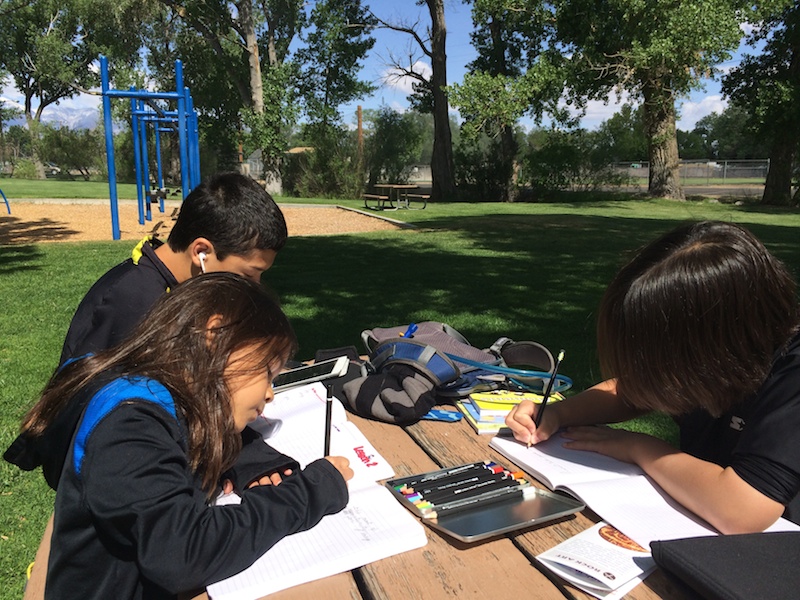
Austin offers many opportunities for local hikes and nature study.   And as part of our school routines, we try to hit a different park or trail each week. You can pack a bag with simple staples like nature journal, pencils, bird/tree guide, water and snacks and quickly head out the door. Or bring your school books and a blanket and make a whole school day out of it.

These are a few of our favorite spots:

Green Belt – There are many great access points.  Some of our favorites include Twin Falls, Loop 360, Spyglass, Sculpture Falls, and Gus Fruh. When there is water running, we could spend hours exploring and playing.

Butler Park District Fountains – With a great view of the city, Town Lake, and general overall awesome vibe, this is a wonderful place to bring a big blanket, scooters, roller blades and even an extra towel when the fountains are running. The kids can “fish” for minnows in the pond or take their books and read on the benches at the top of the “hill.”

Redbud Trail – Located just West of Mopac on 6th street, I’ve heard of this spot as mostly a “dog park/trail,” but I love it for children because of its length and location on the water.  We have seen multiple water birds, turtles, and even crawfish. We’ve studied trees (especially after visiting LCRA Red Bud Center and seeing all of their trees labeled), and also taken our nature journals to draw. A sweet surprise for the kids would be a desert from Mozart’s afterwards (as well as a Chai Latte for Mom).

Zilker Park/Town Lake – The North Side of Zilker Park just feels so free.  The open field invites a child to run as far and as long as they’d like.  The simple rock structure in the middle adds variety and another place to park with a book. The sand in the volleyball courts could provide hours of fun for the younger kids. And there is even free Wi-Fi all throughout the park! You can join the AAH Soccer group on Tuesdays and Thursdays at 9 AM for some exercise and spend the rest of the day reading, playing, or even exploring further at the Austin Nature and Science Center.

Here are a few others I’ll save for another time:

Do you have other favorite trails or parks? Please share – I still love to discover new places!  Thanks!


Calligraphy for Kids

After listening to Steve Job’s Stanford 2005 graduation speech again as well as watching the documentary on his life, I was inspired to buy some Calligraphy pens for my children. I have one child who has a natural eye and hand for art and beauty and was curious to see how he would like it.

He loves it!

I thought I would share the pens and book I chose, as there were a multitude of choices:

This book, Calligraphy for Kids has basic, step-by step instructions and exercises with beautiful examples and several variety of fonts to try.


I chose these pens from The Elegant Writer because of the variety of size options.  If you just want to purchase one pen, I’d suggest a 3.5 or 3.0 size to begin with.


Steve Jobs had no idea how influential his calligraphy course would be in his career. He said it gave him an eye and appreciation for beautiful design, layout, and of course, font. I have spent hundreds of hours myself learning and practicing calligraphy since I was a teenager, and am sure it has had its own intangible rewards.  I am curious to see how it impacts my own kids.

Music for Children

I am so glad to have a younger child – it gives me an excuse to still listen to Children’s singers like Raffi and Laurie Berkner.

If you have young children and haven’t heard of Laurie Berkner yet, check out her website, download a few tunes, and test her out with your kiddos.  I have a feeling you will all be humming her songs and moving around before you know it.

I like those songs that “stick” – either because they make kids move and dance – or because they capture my heart and have different layers of meaning.  For example, the words to Laurie’s song, “Song in my Tummy,” remind me of the different passions inside of us that are just itchy to be expressed.

Here are a few of my favorites for you to start with:

From The Laurie Berkner Band:

From Under the Shady Tree:

And from Buzz Buzz:

  • I’m A Mess
  • Telephone
  • I Really Love To Dance
  • Monster Boogie
  • There’s A Little Wheel a-Turnin’ In My Heart

Who are your favorite musicians for children? Which of Laurie Berkner’s songs do you like?